
Coffee to go
There’s nothing quite like that first coffee of the day. Picture yourself outside your California, morning sun warming your face, taking a moment to breathe and savour the stillness with a perfectly brewed cup in hand. For many campers, it’s more than a caffeine fix – it’s a ritual. And with the California, you’ve got everything you need to make it just right.
We’ve put together a list of the most important rules for making a good vanlife coffee
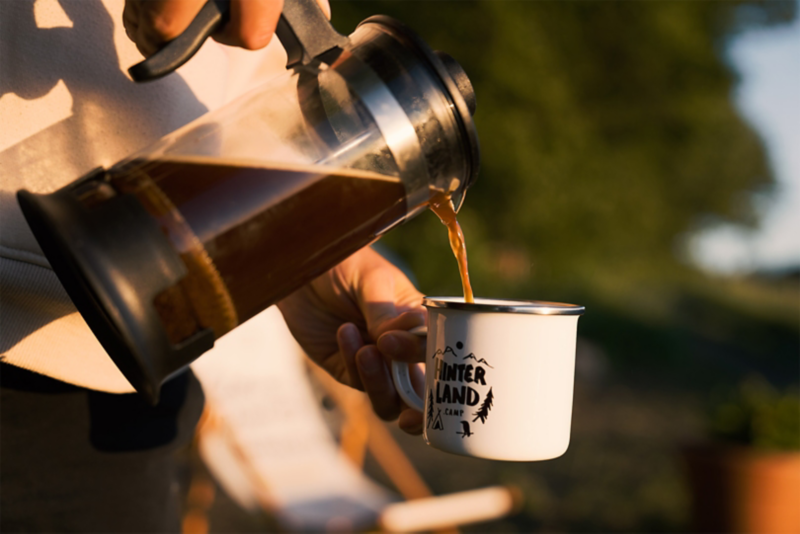
Coffee is so much more than just a simple pleasure, in fact it’s quite the opposite. It’s a complex phenomenon.
Its taste is made up of over 800 different aromas! But like all complex things, coffee is also very sensitive. If handled incorrectly, it can be easily damaged, and not just when it comes to the preparation of the drink itself. Storing it incorrectly can completely spoil the enjoyment of your coffee.
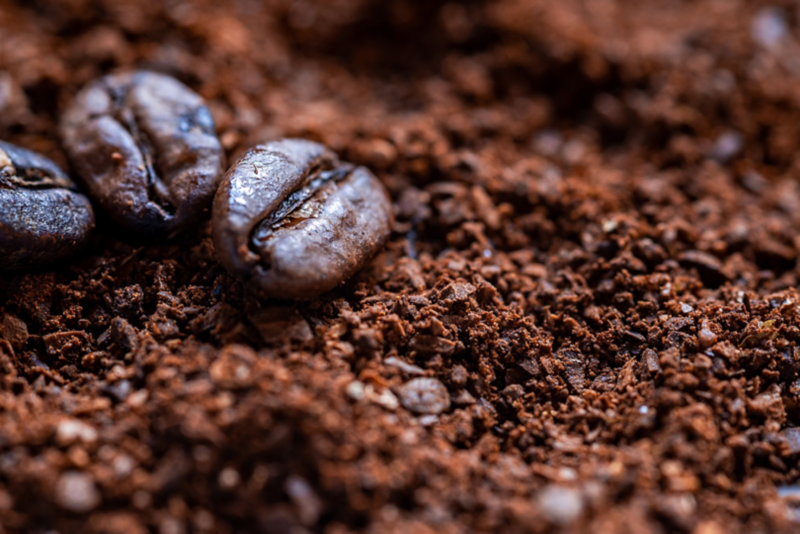
Air and light are the two factors that can turn good coffee into dishwater before you even get the chance to brew it. They cause oxidation and lead to the loss of aromas that are as fine as they are volatile. The resulting coffee then tastes flat, bland and, in the worst case, rancid. Proper storage therefore starts with the purchase of a high-quality aroma box.
Keep the coffee in its packaging and store it inside the box in a shaded area, ideally at a temperature of between 16 and 22°C. Contrary to popular belief, the fridge is not a good place to store coffee. Condensate forms inside, which is too much for even the strongest robusta beans to cope with.
The only moisture that your coffee should come into contact with is the hot water used during preparation.
So where to store your coffee in the California? The cupboards in the kitchen area are best, especially the one under the stove. As long as the camper isn’t in direct sunlight, the drawer under the bench seat can also be a good place.
The most passionate coffee fanatics store their precious beans in an electric thermobox that keeps them at the perfect temperature. Our partner Dometic has several models to choose from!
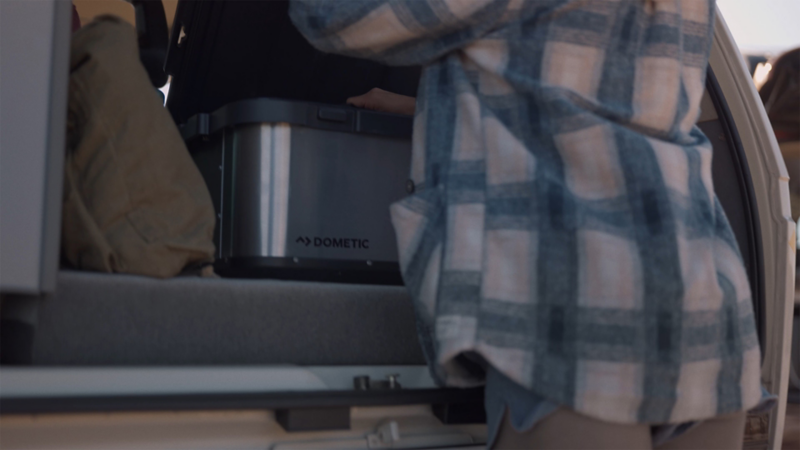
Correct storage will preserve the aroma for around six to twelve weeks. But be careful! Once the coffee is ground, the fine taste evaporates within minutes, as the ground coffee provides a larger surface area for the air to react with. Coffee lovers always take the whole beans with them on their travels and grind it right before brewing.
We recommend a manual grinder! Of course, this doesn’t mean you have to resort to your grandad’s old hand-cranked number. There are now many new models, some of which have been specially developed for outdoor use. As opposed to the electric versions that many coffee lovers have at home, these models weigh little, are easy to pack away and are also much quieter!
As soon as you’ve ground your beans, it’s time to brew

How about a classic filter coffee? Maligned for many years as a cheap and disappointing substitute, it is now experiencing a real comeback. And rightly so! No other way of preparing coffee is better at filtering out the finest aromas. Grind the beans to a medium texture, fill the filter and dampen it so that the coffee can “blossom”. After 30 seconds, pour the rest of the water onto the ground coffee in a circular motion from the inside to the outside.
Take your time; there’s something meditative about this process!

Preparing the coffee “à la française” involves a little less pomp and ceremony. For the French press, grind the beans a little coarser than for the filter, tip the coffee into the carafe and pour the hot water in afterwards. Then stir a few times so that the ground coffee is completely soaked and let everything steep for about four minutes. Finally, slowly press down on the plunger of the French press and separate the coffee powder from the water.
Et voilà!
The Aeropress is very popular in trendy circles and, as of late, also on campsites. It is lightweight, robust and easy to clean. Begin by inserting the filter into the holder, rinsing it with a little with warm water and then screwing it onto the Aeropress. Then tip the finely ground coffee into the chamber, pour in the water and stir. After one or two minutes, press down on the plunger and watch as the coffee flows into the coffee mug. Whether you add a little soy milk is up to you.

Turkish coffee is less hip, but no less popular. The finely ground powder is either boiled directly in the water or boiling water is poured over it in the cup. Some might turn their nose up at this seemingly simplistic method, but it’s worth mentioning that the preparation of Turkish coffee has been on the UNESCO intangible cultural heritage list since 2013! You can also refine this mocha with cardamom, cinnamon and cloves.
And what are fans of an Italian espresso supposed to do – take a fully-automatic coffee machine with them?
Not a great idea. Some of those devices weigh over ten kilos, which is bound to have an influence on fuel consumption. Camping pitches are also often only fused to 4, 6 or (if you’re lucky) 10 amps. Bearing this in mind, a fully-automatic coffee machine is unlikely to make you popular with your neighbours. Even small filter-based machines can trip the fuses on campsites. You should also avoid using capsule machines, because they produce a lot of waste.
If you’re the kind of person who needs a coffee in the morning that comes close to the strength of an espresso from a proper machine, then you’d be better off using a “caffettiera”. The lightweight moka pot is a tried and tested piece of equipment that reliably provides campers with strong and aromatic coffee. Grind the beans to a medium level and don’t pack the coffee too tightly into the filter, as this inhibits the water from flowing through easily. You should also bear in mind that not all moka pots work on induction hobs!

If you want a “proper” espresso from a portafilter machine whilst on the road, we recommend the European Coffee Trip app, which lists bars and cafés where you can find a delicious espresso.
Enjoy!


