Sustainable benefits for our natural world
Vision and responsibility:
Our journey towards green net zero
We are leading the way: our aim as a company is to achieve complete net carbon neutrality by 2050. So, what does that mean? It means that our sights are set firmly on avoiding and reducing CO₂. It also means that the emissions that are technically impossible for us to avoid – for the time being at least – are offset by climate change mitigation measures. This will ultimately enable us to achieve a carbon footprint of net zero.
We are acting now to advance decarbonisation. By 2030, we want to significantly reduce our CO₂ footprint per vehicle in Europe compared to 2018. Electrification is a crucial aspect of this journey: our goal is that the majority of our vehicles will be all-electric models from 2030 onwards. Our plans for our production process are ambitious, too: by 2040, we want to achieve net carbon neutrality in production. A look at the figures reveals that our efforts are already paying off. Thanks to a consistent focus on energy efficiency and climate-friendly power sources, we have already reduced production-related CO₂ emissions by more than 65% FN1.
Full steam ahead: renewable electricity & solar energy
When it comes to achieving net carbon neutrality, energy holds the most potential for change. A 100% climate-friendly power supply using renewable sources has already become the norm for our sites in Poland and Hanover. Nevertheless, we want to do more than just use climate-friendly electricity; we want to be a driving force behind the green revolution, too. That is why the Volkswagen Group is supporting the construction of wind and solar farms across Europe.
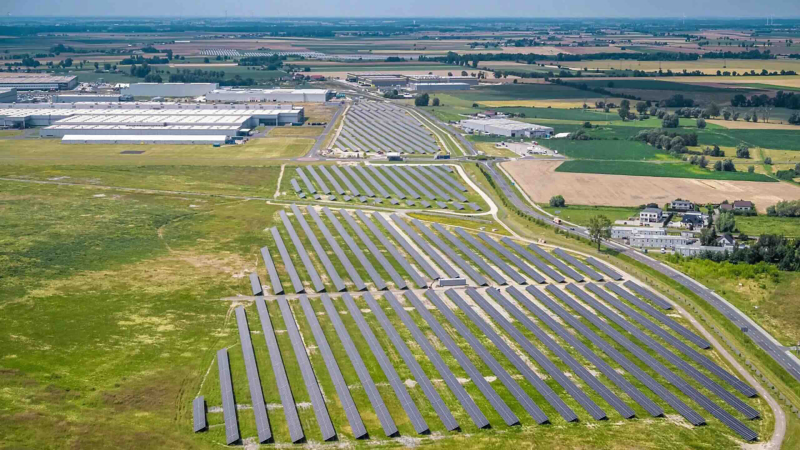
And we are also contributing to climate protection at our local sites: the solar park in Września, for example, covers an area of over 26 hectares. With 25,000 modules and an output of 18.3 megawatts, the factory no longer relies on the public grid at all times. The factory is therefore able to supply itself with climate-friendly electricity.
Smart heating: biomass & resource efficiency
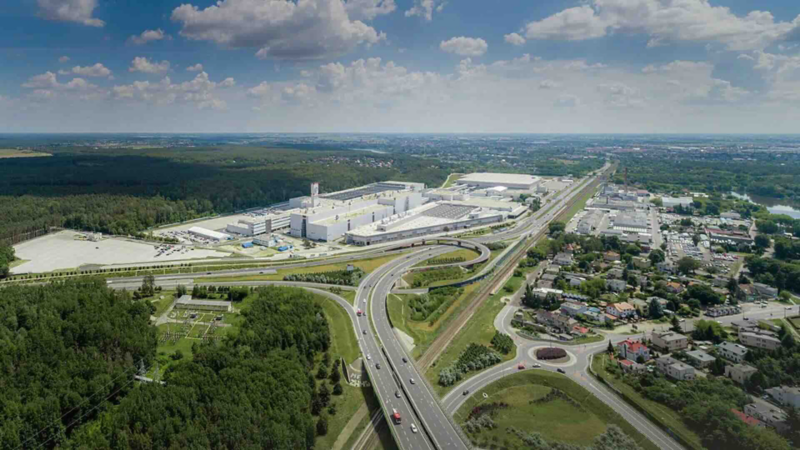
Being energy efficient also means using heat intelligently and replacing fossil fuels over the long term. For example, in Hanover, we use a cutting-edge biomass CHP plant that significantly reduces CO₂ emissions from the site’s heat supply (CO₂ emissions cut by more than 40% compared to 2024). At the same time, we are continuing to tap into existing potential across all areas. At the Poznań site, we feed the industrial waste heat from production, generated by compressors, for example, into the district heating network. As a result, we can heat both our own production halls and around 6,500 neighbouring households in the vicinity. This is real-life resource efficiency that saves up to 3,500 tonnes of CO₂ every year at a regional level.
More than just factories: habitats & biodiversity
For us, protecting our climate also means preserving ecosystems and promoting biodiversity. That’s why we are actively creating new natural habitats at our sites.
- At our factory in Hanover, we have unsealed areas, created grasslands and settled wild bees. Our 180,000 bees, which we have christened the “Bulli bees” after our classic bus model, are now even producing our own factory honey.
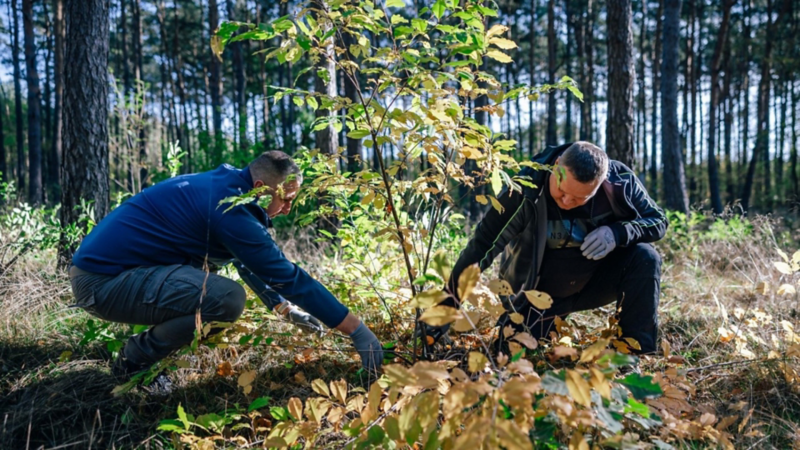
- In the areas surrounding our Poznań and Września factories, our employees have already planted over 150,000 trees, including special species that promote CO₂ sequestration as part of the “Carbon Forest” project. With these efforts, we are boosting regional biodiversity around our sites on a sustainable basis.
Circular economy in the interior
Not only do our vehicles come equipped with low-emission drive systems, we also take the care to use resource-saving materials. In the ID. Buzz and ID. Buzz Cargo, for example, we are increasingly replacing primary plastics with recyclates – materials made from recycled products. This is how we conserve resources.
Depending on equipment, innovative recycling solutions are used in the interior:
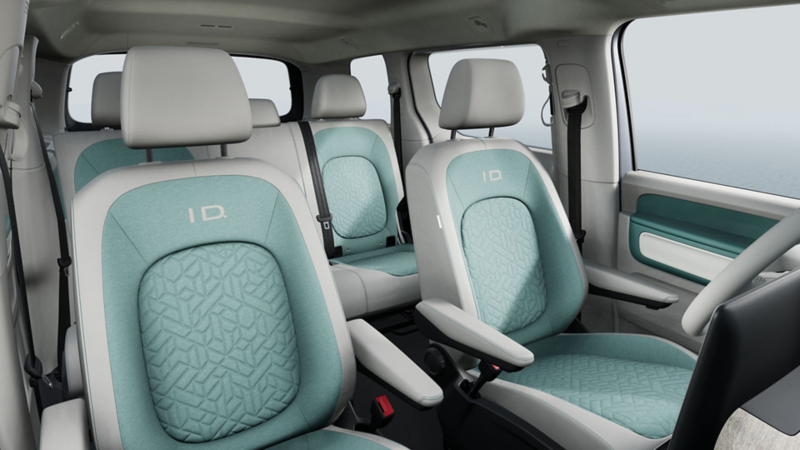
- Seat covers: alternative materials made of marine plastic or old PET bottles (approximately 63 500-millilitre bottles) are used in the seat covers of the Design and Comfort lines of the ID. Buzz People, for example. The surface material of a seat cover is made of Seaqual® yarn, which contains 10% ocean waste and 90% recycled PES. The recycled content of seat covers made of ArtVelours Eco® is 71%.
- Overall footprint: to demonstrate what kind of impact we can have, let’s look at the example of an ID. Buzz with five seats and the equipment to match: in this configuration, a total of 63 PET bottles (0.5 l) are given a second life.
- Floor & side panels: the top layer of the floor mats and optional side pockets in the ID. Buzz Cargo is made from 100% recycled PET bottles.
In this way, we combine environmental awareness with high quality and durability.
Spotlight on the battery: from raw materials to recycling
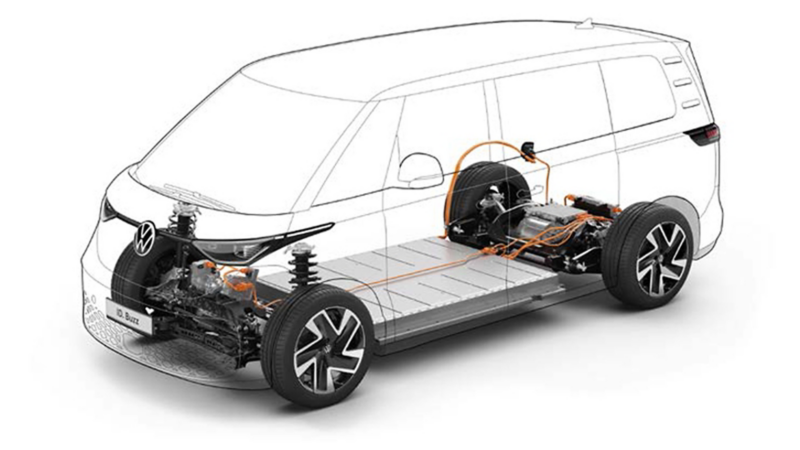
At the heart of our all-electric vehicles is the high-voltage battery. It is also holds a great deal of potential for our carbon footprint. For this reason, we take a holistic view of the battery life cycle:
- Production using climate-friendly electricity: the battery cells for our ID. models are produced exclusively using electricity from renewable sources. This saves us around one tonne of CO₂ per vehicle compared to battery cell production with the EU electricity mix (as of 2025).
- Second life: we don’t regard old batteries as waste. Instead, they are remanufactured or put to new use in large-scale storage facilities (keyword: “re-use”).
- High-tech recycling: recycling is the very final stage. At its pilot plant in Salzgitter, Volkswagen Group Components is already working to recover large quantities of valuable raw materials (such as lithium, nickel and cobalt) from high-voltage batteries.

Frequently asked questions on the topics of environment & production
What is the carbon footprint of the batteries used in electric commercial vehicles?
Which recycled materials are used in electric vehicles?
How is environmental protection ensured in the supply chain?
Do you have certified validation of your vehicles’ carbon footprint?