?Zm10PXdlYnAmcWx0PTc5JndpZD0yODgwJmJmYz1vZmYmOWU4Ng==)
Sustainable travel with the California
Camping is one of the simplest ways to travel with a lighter footprint. With the right approach, exploring in a California can be a considered, responsible way to see more of the world around you. From how you plan your journey to the choices you make on the road, small changes can make a real difference. We’ve pulled together a few straightforward rules to help make your next adventure a little greener. Take a look — you might pick up a new tip, or you may already be well on your way to camping more sustainably.
Rule 1 for an eco-friendly holiday: make smarter choices on the road.
Travel light wherever you can.
The less you take with you, the lower your impact on the environment. Keep the fresh water tank topped up just enough for a brew and a simple meal while you’re on the road. When it comes to food, choosing fresh, local produce is a more sustainable option. Pack the essentials and buy the rest when you arrive. Swap bulky bottles for solid or refillable shampoo, laundry detergent and washing‑up liquid, ideally in compact, sustainable packaging. Your clothes should fit into a single backpack – camping works best with minimalist, multi‑purpose kit.
You’re on holiday, so there’s no need to rush. A calm, anticipatory driving style lets you enjoy the journey just as much as the destination. Arrive at your eco‑friendly campsite feeling relaxed, ready to settle in and switch off straight away. Whether you’re drawn to a simple pitch surrounded by nature or the added comfort of five‑star glamping, there’s a wide range of options to suit every kind of break.
Our two favourite places for sustainable camping
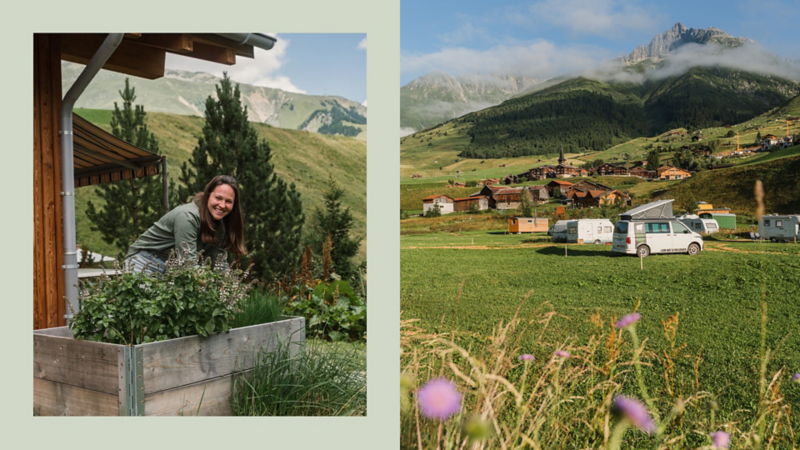
Switzerland: Camping Viva
Sustainable camping set against a storybook alpine backdrop. Camping Viva sits on a natural meadow just outside the picturesque village of Rueras, with sweeping views across the Grisons Alps. Close by, the young Rhine flows past as a gentle stream, right at the start of its long journey to the sea.
Sustainability is woven into every detail. The on‑site restaurant serves dishes made with local, seasonal produce, while tea grown in the campsite garden is available in the shop. Much of the furniture – and even the tiny homes themselves – is handcrafted, giving the space a thoughtful, distinctive character.
Days are made for exploring the alpine landscape in countless ways, while evenings invite you to slow down and unwind in the sauna, housed in its own wooden igloo. Camping Viva is more than a place to stay – it’s a way of life.
Portugal: Salema Eco Camp
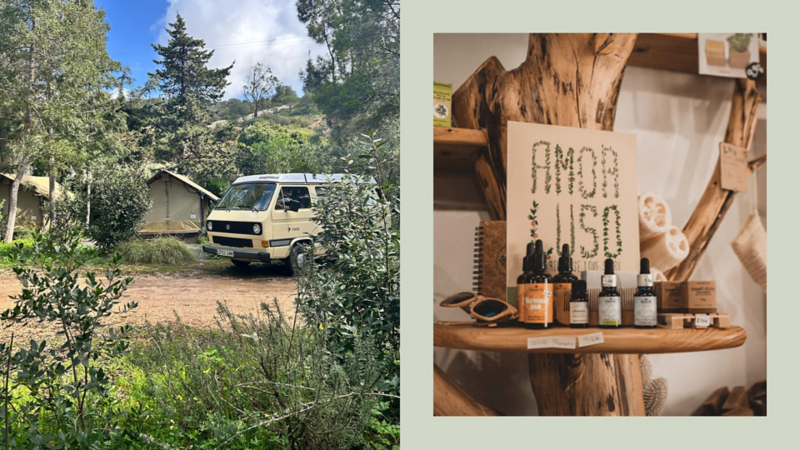
A relaxed and rewarding way to experience sustainable vanlife. There’s no need to reserve a pitch in the natural park along the Costa Vicentina – there’s always space for the California, and you’re free to stay for as long as you like.
The Algarve’s beautiful beaches are just a short drive away, while the campsite itself makes it easy to settle in. Surfboard and bike hire are available on site, alongside a well‑stocked shop offering everything from organic food to eco‑friendly cleaning products and toiletries.
Sustainability sits at the heart of Eco Camp. The team actively supports biodiversity and circular‑economy initiatives, with a strong zero‑waste philosophy guiding everything they do. It’s a place designed to help you travel thoughtfully – without giving up comfort or freedom.
There will be plenty of excursions to tempt you away from your campsite. But it’s worth leaving the California where it is – fuel consumption is higher on short journeys. Instead, consider bringing a bike with you, or hiring one once you arrive. Travelling on two wheels makes it easier to reach shops, restaurants and local sights, without the added hassle of parking. And if cycling isn’t for you, sit back and let someone else take care of the journey. Public transport is often a convenient, low‑impact way to explore your surroundings.

The local farmers’ market
Local markets are a great place to find regional produce. You’ll be supporting local communities, while choosing ingredients that haven’t travelled halfway around the world to reach your plate. Bring a reusable cloth shopping bag to avoid carrying plastic back to the California – preventing waste is always better than dealing with it later. Try to steer clear of disposable cutlery and single‑use bottles, too. Instead, make the most of the California’s on‑board water tank. Follow a few simple rules and it’s perfectly safe to use across Europe.


Before you drive away, drain out your waste water. This reduces unnecessary weight and can help lower fuel consumption. Waste water can be emptied at campsite toilet facilities, or at a designated sani‑dump station if it’s heavily soiled. Nearby disposal points are easy to find in the California app, helping you plan your route ahead of time. Remember to separate and dispose of all other waste correctly. And if you notice litter left behind by others, consider picking it up too. Leaving places as you found them helps protect the environments we all come to enjoy.
Clean camper, clean conscience!
To keep your California looking its best on the road, take a homemade cleaning kit with you.
Bicarbonate of soda and vinegar are surprisingly effective at tackling dirt, while staying kind to the environment. Curd soap is another handy essential. It can be used to clean cutlery, wash laundry thoroughly and is gentle enough for personal use. Fully biodegradable, it leaves no lasting trace in nature – unlike many conventional soaps and shampoos.

Being kind to nature means using resources thoughtfully. Keep showers short, turn off the tap while brushing your teeth, and reuse cooking water for washing up wherever possible. Solar panels or compact wind turbines can also help keep small electronic devices charged while you’re on the move. Most importantly, be mindful of how often you use the air conditioning system. If conditions allow, switch it off – even when driving in warmer regions. Simply opening a window and letting fresh air flow through the California can be all you need, bringing with it the subtle scents of lavender fields, pine forests or the nearby sea.
Sustainable travel, made beautifully simple.


